Short answer: the quickest way to take more money is not more customers — it is each customer spending a little more. Work out your spend per head, print the add-ons on your menu, give your team one natural line for each moment of a visit, and test one change a week against your till.
No advertising budget. No discounts. No pushy selling. Just the customers already walking through your door.
"We're busy, but the money isn't growing. Where do I start?"
Start with one number: spend per head. It is your takings divided by the number of customers. Many tills show it as average transaction value or average spend; if yours only counts transactions, use that.
Illustration · a café serving 120 customers a day
The one number worth knowing: what each customer spends
Today's takings
£816
÷
Customers
120
=
Spend per head
£6.80
Each customer spends
+40p more
That is, a day
£48
And over a year
£14,976
Why this number first? Because it is the one you can move this week. Getting 20% more people through the door takes marketing, time and luck. Getting the people already inside to add a pastry, a side or a coffee takes a line on the menu and a sentence from your team.
It also matters more than it used to. With the National Living Wage at £12.71 an hour from April 2026, every shift costs more — and a customer who spends a little more is paying towards the staff who are already on.
"What should I change on my menu first?"
Print the things people could already have, with a price. Most venues have add-ons nobody knows about: oat milk, an extra shot, a side of chips, a scoop of ice cream. If it is not written down, most guests never ask.
Illustration · the same café menu, three lines added
Print the add-ons. Staff change; the menu is there every day.
Coffee
Oat or soya milk +40p · Syrup +50p · Extra shot +60p
Coffee & any pastry £5.50
Sandwiches
Add a soup of the day +£3.50
A quick way to find yours: order from your own menu as if you had never been in. At each point, ask "what could I add, and would I know I could?"
"I run a coffee shop. What actually works?"
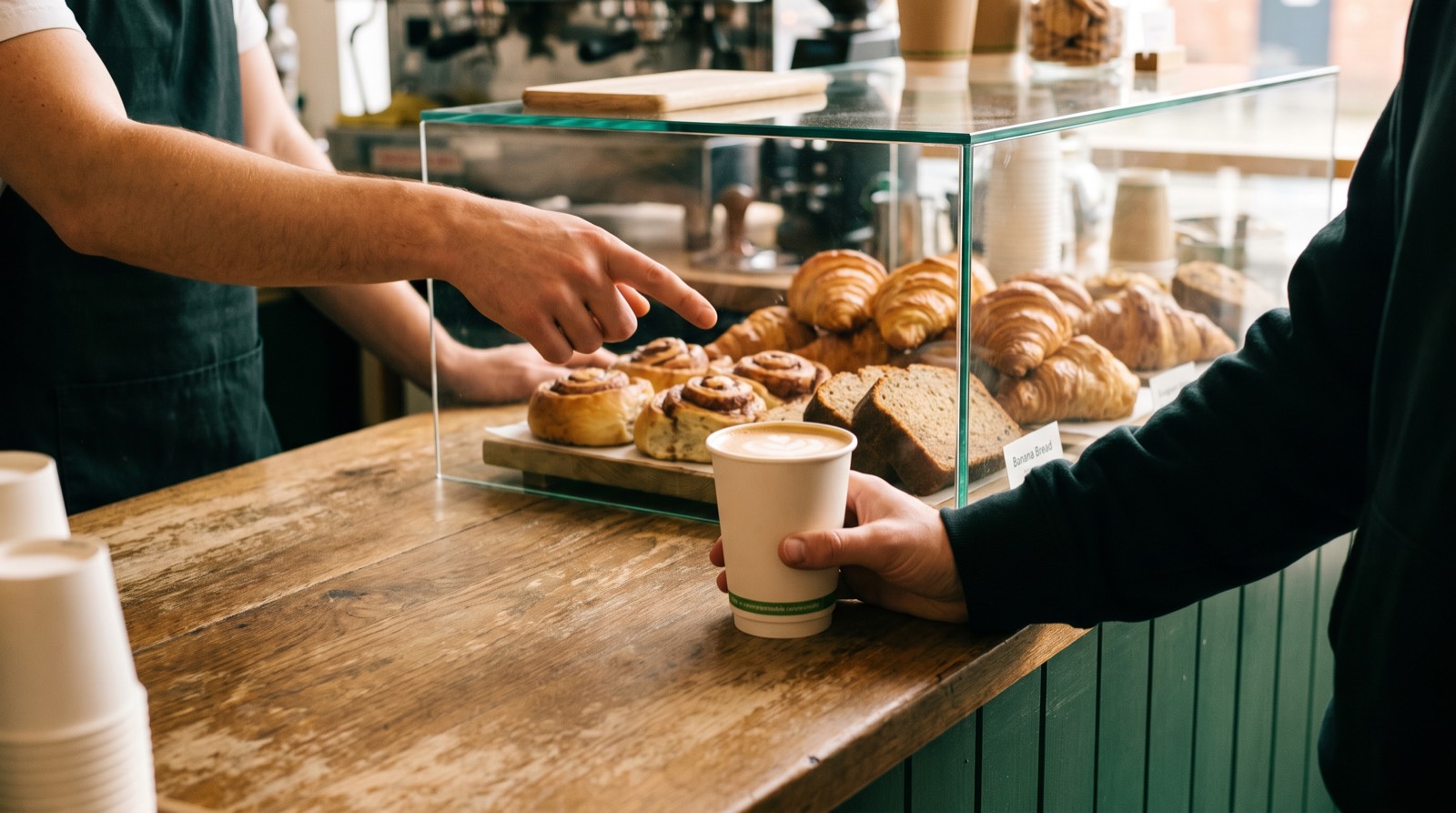
In a café, the money is made around the cup. Four places to look:
| Where | What to check | Example |
|---|---|---|
| Extras | Are milk alternatives, syrups and extra shots priced and printed? | "Oat or soya +40p · Syrup +50p" |
| Sizes | Do you offer a larger size for regulars who want one? | Regular and large, both priced |
| Pairings | Does anything link a drink to something to eat? | "Coffee & any pastry £5.50" |
| The counter | Is the best food where people wait? | Fresh bakes at eye level by the till |
"I run a pub. How do I sell more food with the drinks?"
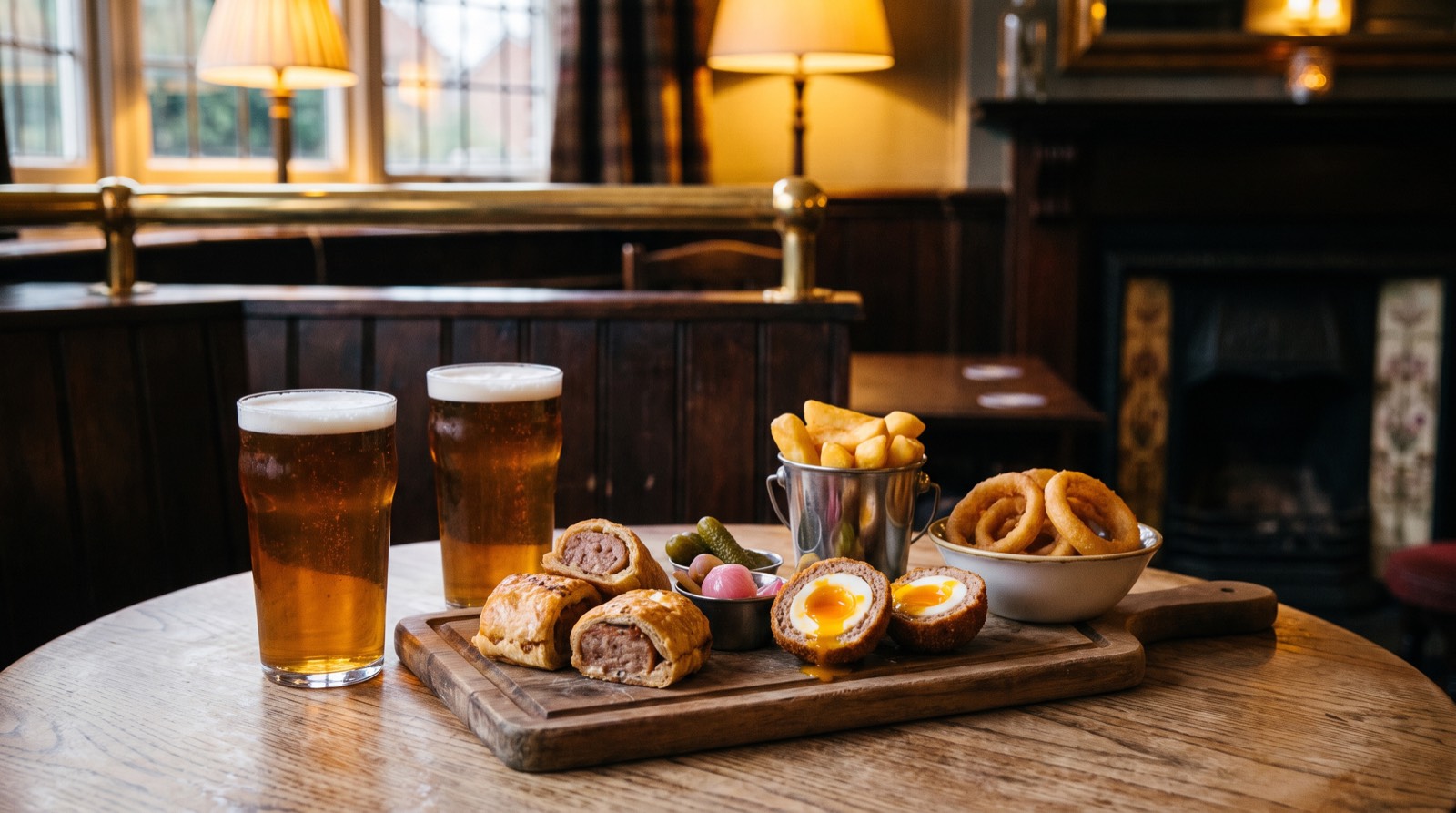
A table that came in for a drink will often eat something if it is easy — something to share, not a full meal. Check three things:
- Something to pick at. A board, a bowl of chips, a few bar snacks at easy prices, near the top of the menu.
- Sides and add-ons. Can a guest add onion rings, a sauce or a side salad to a main? If they are not printed, they are rarely ordered.
- The weekly favourite. If you do a roast, a curry night or a pie night, say so on the menu and the board — with the day — so weekday drinkers know to come back.
"How do I get my staff to sell more without being pushy?"
Give them one natural line for each moment, not a target. A specific suggestion feels like good service. "Anything else?" feels like a script.
Four moments in a visit
One natural line at the right moment — not a sales pitch
- 1
Ordering a coffee
“The banana bread’s just come out — want a slice with that?”
- 2
Ordering a main
“That’s lovely with the triple-cooked chips — shall I add some?”
- 3
Plates cleared
“Leave room? The sticky toffee pudding is on today.”
- 4
Before the bill
“Can I get you a coffee to finish?”
A few lines that sound like a person, not a sales course:
| Moment | Try | Avoid |
|---|---|---|
| Coffee order | "Want a slice of the banana bread? It's just come out." | "Would you like anything else with that?" |
| Main course | "That's lovely with the triple-cooked chips — shall I add some?" | "Do you want to upsize?" |
| Table of four with drinks | "A board to share while you decide?" | Handing over menus and walking off |
| Plates cleared | "Leave room? The sticky toffee pudding's on today." | "Any desserts?" |
| Before the bill | "Coffee to finish?" | Bringing the bill unasked |
Three rules for the team: offer one thing, name it, and make "no" easy. Nobody should feel sold to. And make sure they have tasted what they are recommending.
"What about restaurants — where is the easy money?"
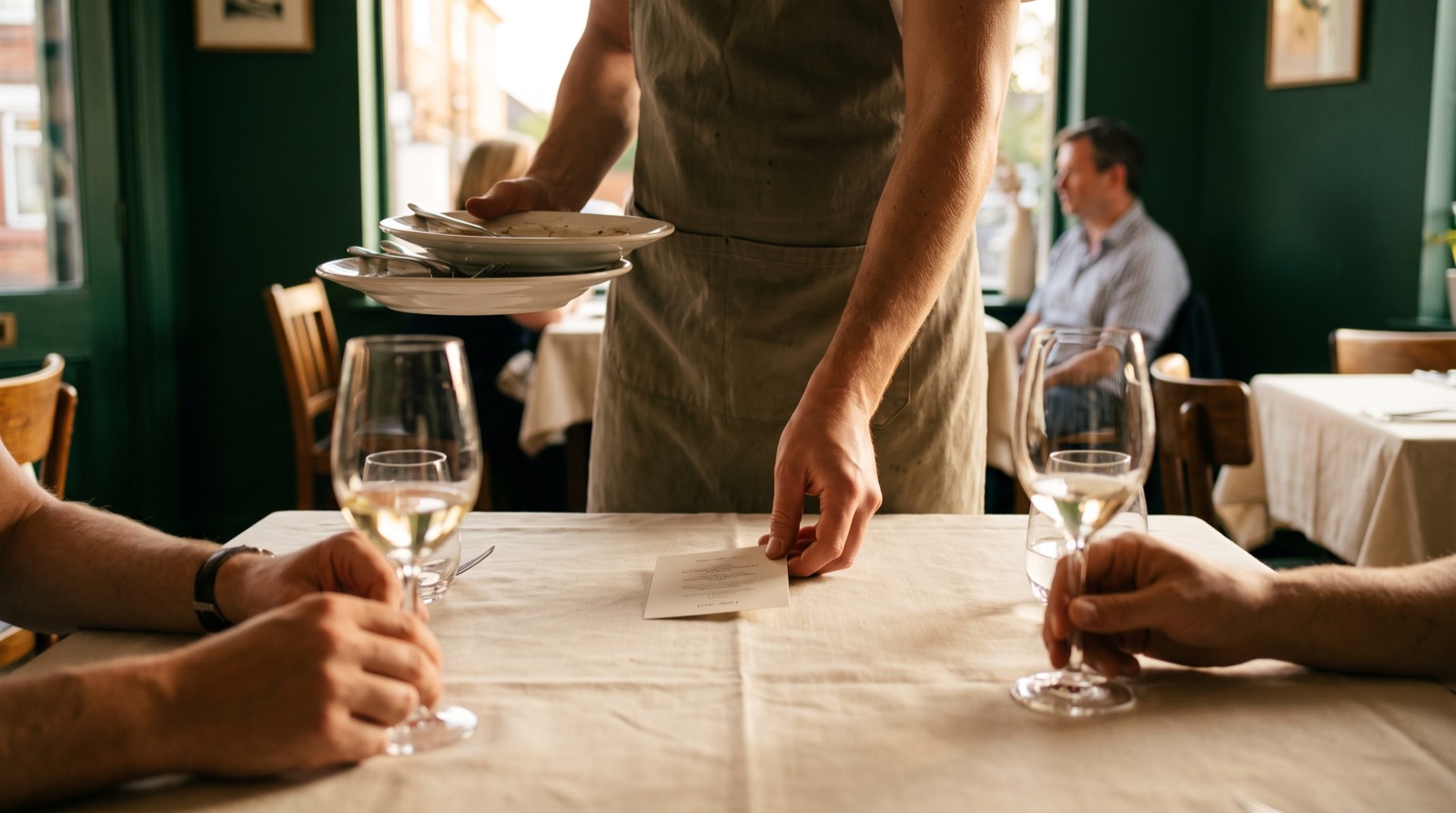
In a restaurant it is usually at the edges of the meal: something before the main, and something after it.
- Before: bread, olives or a small plate while guests decide.
- With the main: sides that are printed, priced and suggested.
- After: a dessert card on the table when plates are cleared, and coffee offered before the bill. If desserts live on a separate card, make sure every table actually sees it.
If you have more than one of these gaps, our guide on how to price a menu in the UK covers setting the prices for them.
"How do I know if it's actually working?"
Change one thing, then compare the same days of the week. If you change five things at once, you will never know which one helped.
Illustration · spend per head, one week before and after
Change one thing, then compare like-for-like weeks
Week before
average £6.81
Week after
average £7.23
Keep it simple: a note of spend per head for each day, the change you made, and the date. Avoid comparing a normal week with a bank holiday or a heatwave. If the average moves, keep the change; if not, try the next one.
"I haven't got time for all this. What's the plan?"
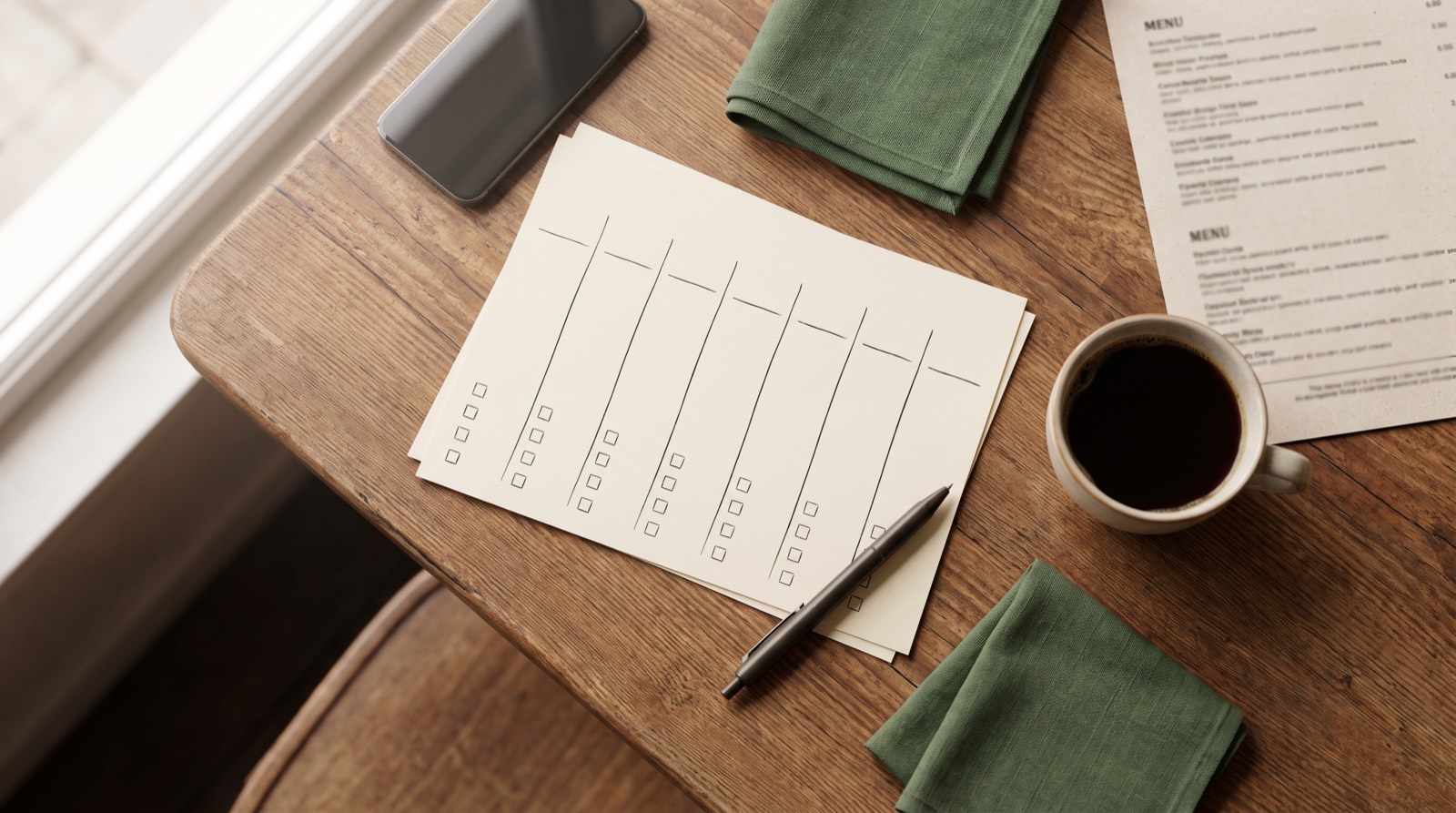
Twenty minutes a day, before opening:
A one-week plan
Seven small jobs, about twenty minutes each
- MonWork out last week’s spend per head from your till.
- TueOrder from your own menu as if you were a guest. What is missing?
- WedAdd one printed add-on or pairing line, with a price.
- ThuAgree three natural lines with your team, one per moment.
- FriPut your best pairing where people queue or wait.
- SatServe as normal. Note what guests ask about.
- SunCompare spend per head with the same days last week.
"What if I get it wrong?"
You will, sometimes — and that is fine, because every change is small and every change is measured. The things to avoid:
- Discounting to drive spend. A deal should add something ("coffee & pastry"), not cut the price of what people already buy.
- Pushing every guest, every time. Regulars notice. One line, offered once, is enough.
- Adding items you can't deliver. A new side that slows the kitchen down on a Saturday costs more than it earns.
- Shrinking portions quietly. Guests always notice, and it undoes the goodwill everything else relies on.
Get a second pair of eyes on your menu
Finding the gaps is the hard part when it is your own menu — you have read it a thousand times. That is exactly what we built MenuMargin to do. Upload a photo of your menu for a free audit: it checks for missing extras, sides, pairings and desserts for your kind of venue, shows your top three fixes, and includes a calculator for what a change is worth with your own weekly numbers.
This guide comes from the day-to-day operations work behind Epicurean Digital Consultants, the hospitality consultancy I founded after more than 20 years running food and drink businesses.
Sources
- GOV.UK. National Minimum Wage and National Living Wage rates (National Living Wage £12.71 an hour from 1 April 2026).