Every restaurant has a best-seller. The dish that flies out of the kitchen, the one servers recommend without thinking. But here's the uncomfortable truth most UK restaurant owners eventually discover: your best-selling dish might be quietly bleeding money.
That signature burger selling 80 portions a day? Once you properly cost the brioche bun, the 28-day aged beef patty, the house-made pickles, and the branded sauce, the GP might be sitting at 54% — well below the 65-70% target that keeps a UK restaurant healthy.
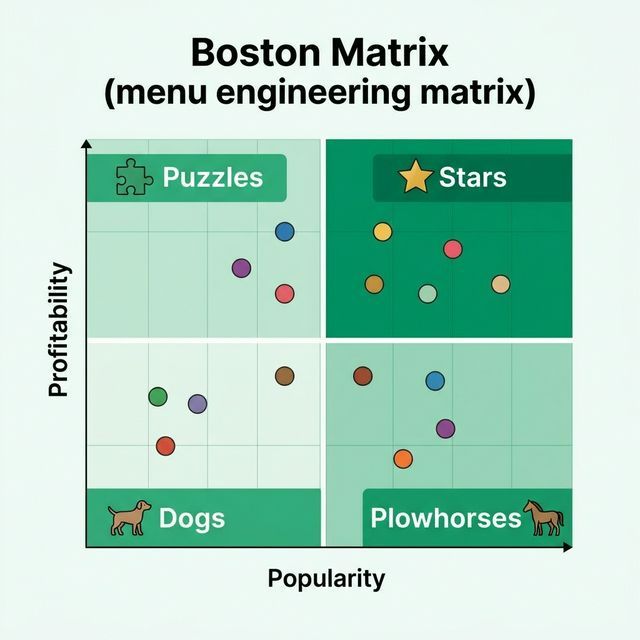
Menu engineering is the discipline that fixes this blind spot. It analyses every item on your menu across two dimensions — popularity (how often it sells) and profitability (how much gross profit it generates per portion) — then classifies each dish so you know exactly what to promote, reprice, rework, or remove.
You can do this with a spreadsheet. Many operators have. But in 2026, with UK food inflation averaging 4.4% and ingredient prices shifting weekly, a static spreadsheet is a snapshot of a world that no longer exists by the time you finish the analysis.
This guide compares the menu engineering software available to UK restaurants right now — what each tool actually does, what it costs, and which one fits different types of venues.
What Menu Engineering Software Actually Does
At its core, menu engineering software automates the process of plotting your menu items on a profitability-vs-popularity matrix — sometimes called the Boston Matrix or BCG Matrix when applied to menus.
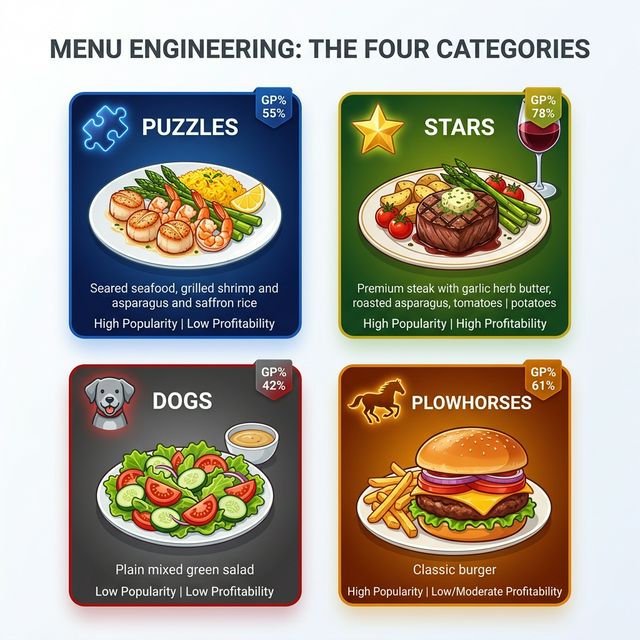
Every dish on your menu falls into one of four quadrants:
Stars — High popularity, high profitability. These are your heroes. Protect them, promote them, and never let their recipe drift.
Plowhorses — High popularity, low profitability. They sell well but don't earn their keep. You need to either reduce the food cost (smaller portion, cheaper ingredient substitute) or raise the price carefully.
Puzzles — Low popularity, high profitability. Great margins, but nobody's ordering them. Better menu placement, a renamed description, or a server recommendation can shift these into Stars.
Dogs — Low popularity, low profitability. They're taking up menu space, kitchen prep time, and ingredient storage without contributing to your bottom line. Rework them completely or remove them.
The software automates this classification by connecting two data sources: sales volume from your POS system and food cost per dish from your recipe costing. Instead of running this analysis once a quarter (or once a year, if we're being honest), you get a continuously updated view of which items are working and which aren't.
The features that separate good menu engineering software from basic reporting tools are POS integration that pulls sales data automatically, live recipe costs that update when supplier prices change, contribution margin analysis in actual pounds (not just percentages), the Boston Matrix visualisation with clear quadrant classification, and actionable recommendations telling you what to do rather than just what the numbers say.
The UK Menu Engineering Software Landscape in 2026
Here are the main options available to UK restaurants, from enterprise platforms down to tools built for single-site independents.
1. MenuMargin — Menu Audit, Costing and Menu Engineering
Price: Free to start, £29 one-off for a full menu audit, £39/month for Pro Best for: Independent restaurants, cafés, and pubs that want to audit their current menu first, then add costing and profitability analysis Website: menumargin.co.uk
MenuMargin takes a different starting point from the other tools on this list. Most menu engineering platforms begin with your sales and cost data. MenuMargin begins with the menu you already have: upload a photo, PDF or link and it reviews the visible pricing, descriptions and structure. Classifying dishes by profitability comes afterwards, once you add recipe costs and sales volume — a menu on its own does not contain either figure.
With your own dish costs and sales entered, the Profit Pulse dashboard tracks GP% per dish with traffic-light colour coding and places each dish on the menu-engineering matrix (Stars, Plowhorses, Puzzles, Dogs). It also includes six menu templates (restaurant, café, pub, takeaway, plain modern and a dark evening design) and an AI Magic Button that drafts description rewrites and pricing and placement suggestions for you to review.
Where MenuMargin stands apart is the AI layer. The platform includes an AI chat assistant that can answer menu engineering questions using live market data (on Pro plans), a menu scanner that digitises existing menus from photos or URLs, and invoice scanning that helps keep ingredient costs up to date.
It also helps you organise UK allergen information, recording all 14 allergens named in the Food Information Regulations 2014 against each dish and generating an allergen matrix with automatic icons on printed and digital menus. Responsibility for verifying that information remains with the food business, but most menu engineering tools don't help with it at all.
What to consider: MenuMargin is a newer platform compared to established players like Jelly or Kitchen CUT. It doesn't currently integrate with POS systems (ePOSnow, Square, etc.), which means sales popularity data needs to be inputted manually or inferred from your own records rather than pulled automatically. For venues that already have POS integration as a hard requirement, this is a limitation. However, for the large number of UK independents that don't use a POS system beyond basic card payments, this is less of an issue.
Pricing breakdown: Free (upload a menu and see your score and first findings, no card needed), a full menu audit as a one-off £29 (every finding ranked plus drafted dish rewrites), and Pro at £39/month for venues changing their menu through the year.
2. Jelly — Automated Invoice Scanning + GP Tracking
Price: £129/month per location (flat rate) Best for: Growing multi-site restaurants with £500k+ revenue that need automated invoice processing and POS-linked GP tracking Website: getjelly.co.uk
Jelly is the most talked-about back-of-house platform in UK hospitality right now. Its core strength is automated invoice scanning — upload or email a supplier invoice, and Jelly extracts every line item (quantity, SKU, price, tax) without manual typing. This data then feeds into recipe costing, so dish-level GP updates in real time as ingredient prices change.
The menu engineering component comes through Jelly's "Flash Reports" and "Sales Mix" features, which connect to POS systems (ePOSnow, Square, Toast) to combine sales volume with food cost. You get daily, weekly, and monthly GP visibility per dish.
Jelly claims strong UK case studies — Amber restaurant reports £3,000-£4,000 monthly savings with a 68x ROI, and operators typically see around 3% food cost reduction within three months.
What to consider: At £129/month per location, Jelly is priced for venues that will use the full suite — invoice scanning, inventory, ordering, recipe costing, and menu analysis. If menu engineering is your primary need, you're paying for a lot of functionality you may not use. Jelly also focuses on GP tracking and profitability reporting rather than the visual menu design or AI-powered recommendations that some operators want. The Xero-only accounting integration may be limiting if you use Sage or QuickBooks.
3. Brikly (MenuBrik) — Modular Menu Profitability Analysis
Price: From £39/month (MenuBrik module, requires CostingBrik) Best for: Independent cafés that want focused menu engineering without paying for a full back-of-house suite Website: brik.ly
Brikly offers a modular approach — you buy only the components you need. MenuBrik is their menu engineering module, providing the full Stars/Plowhorses/Puzzles/Dogs matrix powered by live recipe costs from CostingBrik (their recipe costing module).
The standout feature is modifier-level insights. If 40% of your burger orders add halloumi and that add-on drops the GP from 72% to 58%, MenuBrik shows you that impact. Most basic GP reports don't capture this level of detail.
What to consider: Brikly is a newer product with a smaller customer base. POS integration is currently strongest with Square; check compatibility with your system. You'll need both MenuBrik and CostingBrik, so the real cost is higher than the headline £39/month figure.
4. Kitchen CUT — Enterprise Menu Engineering
Price: From £66/month (KC Lite for single-site); enterprise pricing custom (typically £300+/month) Best for: Large multi-site groups, hotel chains, and enterprise hospitality operations Website: kitchencut.com
Kitchen CUT is the established enterprise player. Built by chefs for chefs, it offers comprehensive recipe management, menu costing, supplier management, and menu engineering reporting. The platform integrates with legacy hotel and hospitality systems that newer tools don't support.
In July 2025, Kitchen CUT launched KC Lite at £66/month for single-site operators — a significant price reduction from their traditional enterprise offering. This makes the platform more accessible, though it still positions itself primarily for larger operations.
What to consider: Setup typically takes 8-12 weeks — significantly longer than alternatives. The interface reflects its enterprise heritage and can feel complex for a small café owner who just wants to know which dishes to reprice. KC Lite narrows the gap, but the DNA is still enterprise-first.
5. Access Group (Procure Wizard Evo) — Full Procurement + Menu Engineering
Price: Custom enterprise pricing (not publicly listed) Best for: Large groups already using Access Group's hospitality procurement suite Website: theaccessgroup.com/hospitality
Access Group's Procure Wizard Evo is a procurement-first platform with menu engineering built in. Trusted by 9,700+ UK hospitality sites, it connects supplier pricing to live recipe costs and includes AI-driven waste reduction features. The claim is that operators save 4% of food spend (roughly £6,500 per £100k of food purchases).
What to consider: This is a full procurement suite — purchasing, invoicing, supplier management, stock control — with menu engineering as one feature among many. Pricing isn't publicly listed, which typically signals enterprise-level contracts. If you're not already in the Access Group ecosystem, the onboarding investment is substantial.
6. Apicbase — Multi-Site Recipe & Menu Engineering
Price: Custom pricing (not publicly listed; enterprise focus) Best for: Multi-site restaurant groups and food service chains in Europe Website: get.apicbase.com
Apicbase integrates with POS systems to generate a live menu engineering matrix. It combines recipe management, food costing, inventory control, and menu analysis in a single platform. Strong in the European market with multi-language support.
What to consider: Like Access Group, pricing is custom and enterprise-oriented. The platform is powerful but designed for multi-site operations with dedicated operations managers, not for a single-site pub owner who wants to quickly assess their menu.
7. Spreadsheets (Excel / Google Sheets)
Price: Free Best for: Learning the fundamentals of menu engineering before investing in software
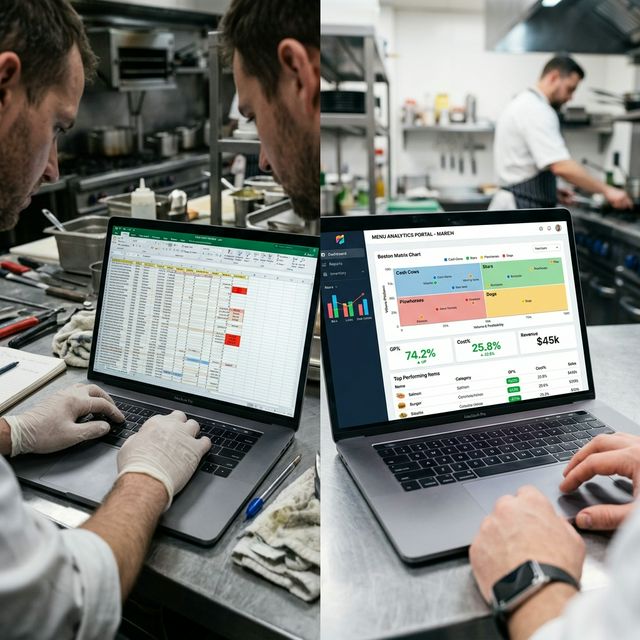
The manual approach: export your sales mix from your POS (or count manually), list your recipe costs, calculate the contribution margin per dish, and plot them on a matrix.
What to consider: It's free and forces you to deeply understand the numbers. But it's a static snapshot that goes stale immediately. Ingredient prices change, sales mix shifts with seasons, and the analysis takes a full day for a 40-item menu. Most operators who start with a spreadsheet do it once and never revisit — which defeats the entire purpose of ongoing menu engineering.
Comparison Table
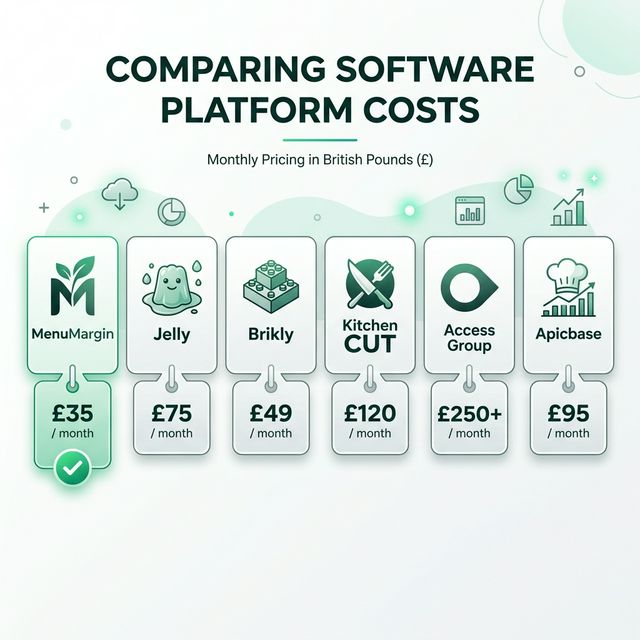
| Feature | MenuMargin | Jelly | Brikly | Kitchen CUT | Access Group | Apicbase |
|---|---|---|---|---|---|---|
| Monthly price | Free scan; £29 one-off audit; £39/month Pro | £129/location | From £39 | From £66 | Custom | Custom |
| Menu engineering matrix | Yes, from your cost and sales data | GP reports + Sales Mix | Full matrix | Full matrix | Full matrix | Full matrix |
| Menu design templates | 6 templates | No | No | No | No | No |
| AI recommendations | Yes (Magic Button) | No | No | No | AI waste reduction | No |
| POS integration | Not yet | ePOSnow, Square, Toast | Square | Multiple | Multiple | Multiple |
| Invoice scanning | Yes (3 credits) | Yes (automated) | Via CostingBrik | Yes | Yes | Yes |
| UK allergen records | 14 allergens (operator verifies) | No | No | Yes | Yes | Yes |
| Setup time | Same day | ~1 week | Same day | 8-12 weeks | Weeks-months | Weeks-months |
| Best for | Independents wanting design + engineering | Multi-site with £500k+ revenue | Cafés wanting modular tools | Enterprise/hotel groups | Large groups in Access ecosystem | European multi-site chains |
How to Choose the Right Tool for Your Venue
The right menu engineering software depends on three factors: the size of your operation, how much you're willing to spend monthly, and whether you need the tool to also handle menu design and allergen compliance or just crunch the numbers.
If you're a single-site independent restaurant, pub, or café — and you want to audit your current menu, then add food costing, allergen records and menu engineering without enterprise pricing — MenuMargin starts free, with a £29 one-off full audit or £39/month for Pro. The tradeoff is no POS integration yet, so sales figures are entered by hand.
If you're a growing multi-site operation with £500k+ revenue per location and you need automated invoice scanning, POS-linked GP tracking, and tight supplier cost control, Jelly at £129/month per site is the strongest option in the UK market right now.
If you're a café owner who wants focused, modular tools without paying for features you don't need, Brikly's MenuBrik from £39/month gives you the matrix analysis with modifier-level detail.
If you're an enterprise group or hotel chain with an IT team and a procurement budget, Kitchen CUT or Access Group's Procure Wizard will integrate with your existing systems — but expect longer setup times and custom pricing.
If you've never done menu engineering before, start with a spreadsheet. Cost your top 20 dishes, calculate the contribution margin, and plot them on a matrix. You'll learn more about your menu in a day than you have in years. Then decide which software to invest in based on what you discover.
The Real Cost of Not Doing Menu Engineering
The UK Food and Drink Federation forecasts food inflation averaging 4.4% across 2026, slowing to 3.1% by December. That means your ingredient costs are rising every month. If your menu prices haven't moved — or if they moved but you guessed the amounts rather than calculating them — you're losing margin on every cover.
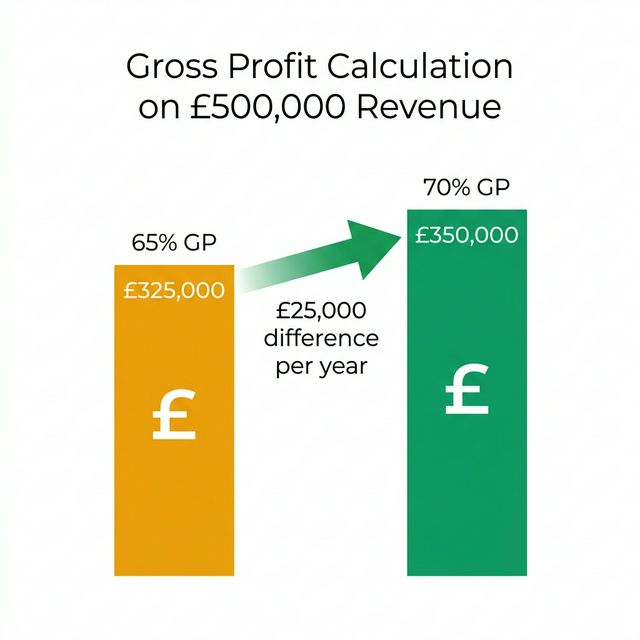
The benchmark food cost percentage for UK full-service restaurants sits at 28-32%, which translates to a gross profit margin of 68-72%. Top operators aim for 70%+ GP. The difference between 65% GP and 70% GP on £500,000 of annual food revenue is £25,000 of gross profit — enough to hire an additional part-time team member or fund a full kitchen equipment upgrade.
Menu engineering doesn't require a massive investment. It requires knowing your numbers and acting on them. Whether you use software at £39/month or a spreadsheet at £0, the critical thing is to start classifying your dishes, identifying the Dogs draining your margin, and pushing your Stars to the front of the menu.